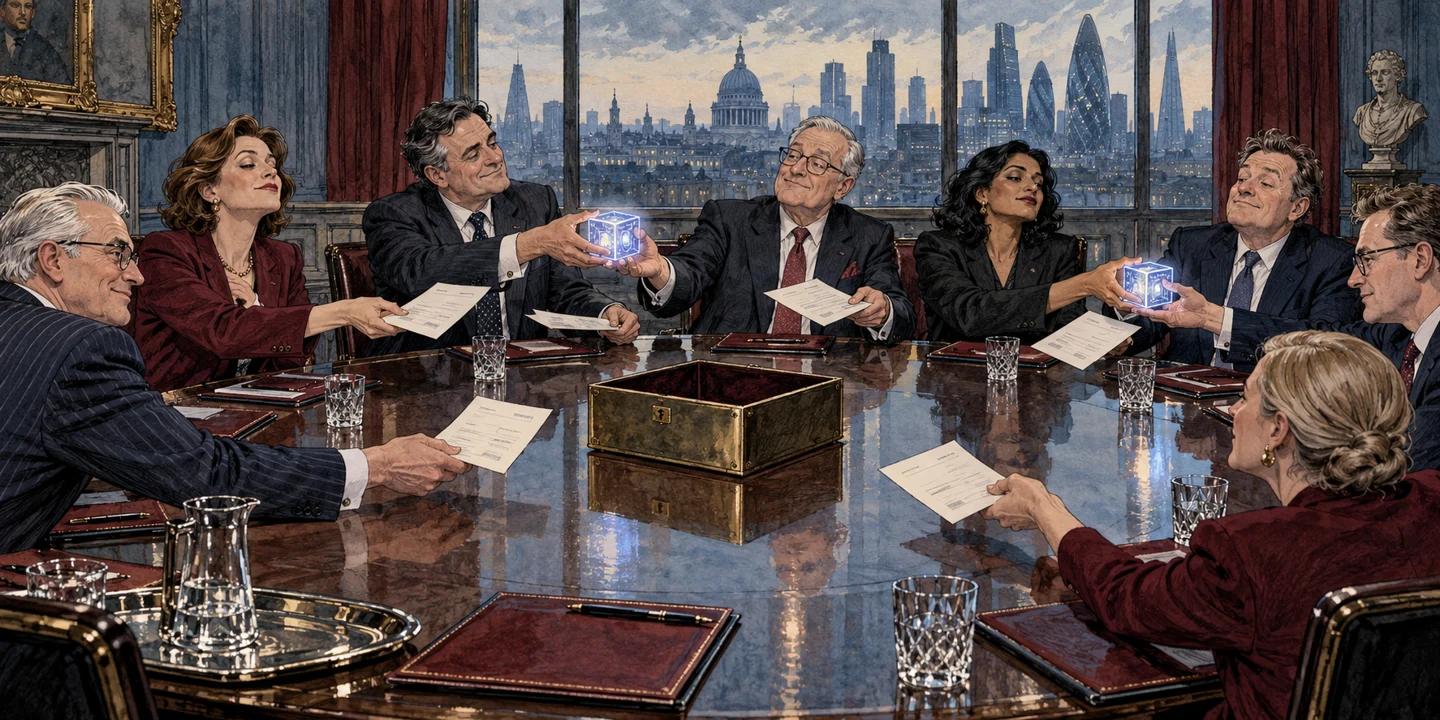
Investors preparing for technology earnings have asked to see proof that AI makes money. In The Bystander’s fictional version of events, the presentation team has responded by increasing the size of the upward arrow.
With major technology groups due to report, the fictional investment firm Ashcombe Capital has assembled a specialist team to determine which upward arrows represent revenue and which represent the designer holding down Shift.
“We remain extremely confident in the long term,” said its invented chief strategist, who defines the long term as any period after the next person has bought the shares. “The near term is more nuanced, by which I mean we have opened the spreadsheet.”
The firm has introduced a traffic-light system for evaluating AI expenditure. Green means strong commercial returns. Amber means strong management conviction. Purple means the presentation contains a photograph of a server farm at dusk, which overrides the other two.
Analysts will listen closely for evidence that vast infrastructure spending is creating durable demand. They will also listen for the word “monetisation”, which can indicate either that revenue exists or that someone has reached the slide about why it does not yet exist.
One fictional portfolio manager explained that conventional valuation techniques struggle to capture the opportunity. This is particularly true when the conventional technique involves comparing the amount paid with the amount likely to come back.
The research team has therefore developed a new metric: total addressable reassurance. It measures how many times an executive can say customers are excited before anyone asks whether those customers have signed anything.
The bear case has been given equal consideration. It occupies a single slide at the end of the deck and is headed Risks We Believe Are Priced In. Nobody can remember what price they were priced in at.
If results disappoint, Ashcombe Capital will describe the sell-off as healthy. If shares rise, it will describe the market as discerning. Either outcome will demonstrate the value of professional advice.
The only scenario for which the firm has no prepared statement is a technology executive arriving with a short presentation, modest spending plans and a plainly explained profit. Staff have been told this remains unlikely.