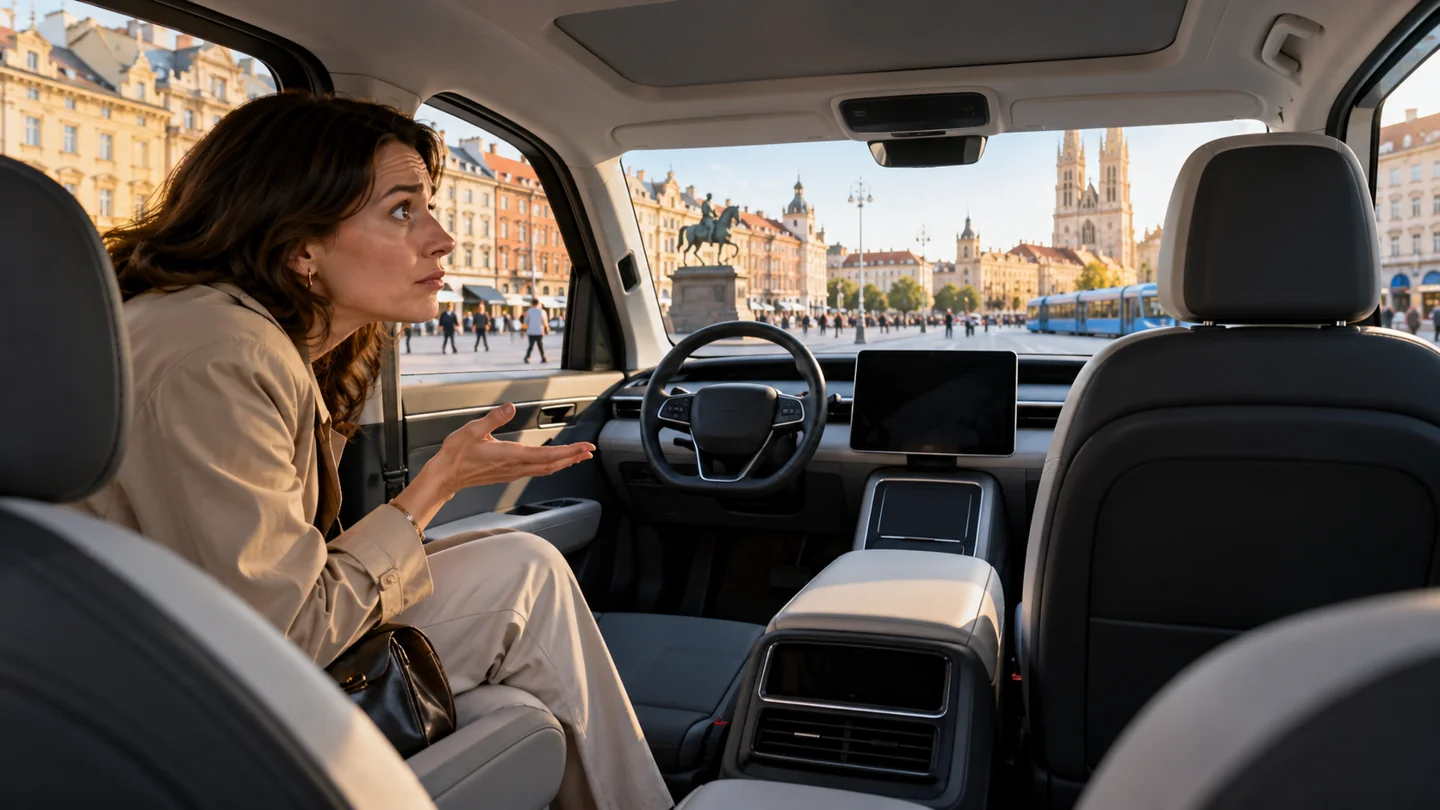
A fictional passenger has discovered that the most disruptive feature of a driverless taxi is the removal of the person who would normally agree that the app has made everything worse.
The vehicle offered a smooth journey, accurate navigation and a touchscreen containing seventeen routes to customer support. None involved speaking to anyone currently travelling in the same direction.
When the imaginary passenger asked why the car had stopped, it displayed a reassuring animation. When he asked how long it would remain stopped, the animation became more reassuring. The vehicle had evidently mastered the distinction between providing information and expressing confidence.
An invented transport strategist called this a major advance in passenger autonomy. Customers could now choose their own music, temperature and preferred interpretation of a warning light. Responsibility for the journey remained distributed across several companies whose logos appeared in very small print.
The passenger attempted traditional taxi conversation, observing that the traffic was terrible and asking whether the car had been busy. Silence followed. He admitted this was an improvement on some previous journeys, although he missed having someone else blame the council.
At the destination, the app asked him to rate the driver. He gave five stars to the empty seat, which had listened patiently and had not once explained how the country should be run.