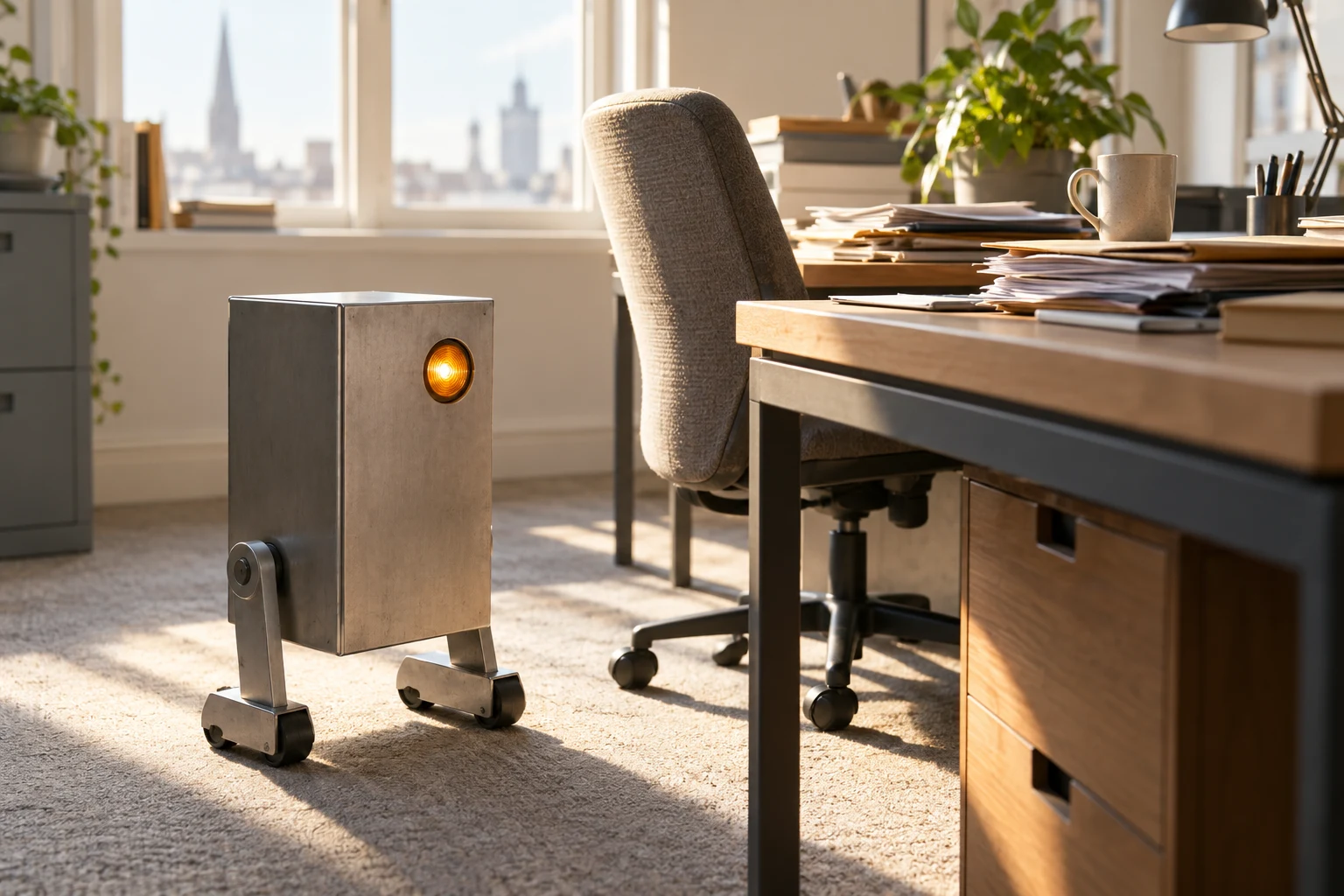
A fictional grocery delivery robot has requested a remote working arrangement after its first encounter with the British pavement.
The machine had successfully processed thousands of traffic scenarios before leaving the supermarket. Within six minutes it met a wheelie bin placed diagonally, a parked van and a pedestrian determined to let it go first.
The pedestrian waved. The robot stopped. The pedestrian waved more emphatically. The robot recalculated.
Both remained there long enough for the milk to become an urgent stakeholder.
Engineers said the system had been trained to avoid obstacles but had not anticipated an entire street treating the pavement as a storage subscription included with council tax.
A dropped kerb briefly offered a route forward, until the robot discovered that it led directly into another kerb, placed there by a different part of the council.
At this point a passer-by called it “little fella” and asked whether it was lost. The robot classified this as a customer service interaction and opened a support ticket for itself.
An eight-year-old offered to escort it home. An adult filmed the encounter horizontally for eleven seconds before rotating the phone and asking it whether it paid road tax.
The robot eventually completed its delivery after following a dog through a gap its mapping system had marked as theoretical.
The customer said the service was impressive but asked whether it could collect a prescription, have a look at the recycling and tell next door to move their car.
Back at base, the machine submitted a proposal to deliver future groceries by video call.
Management declined. The robot has since applied for a role in strategy, where identifying obstacles without getting past them is considered a transferable skill.